
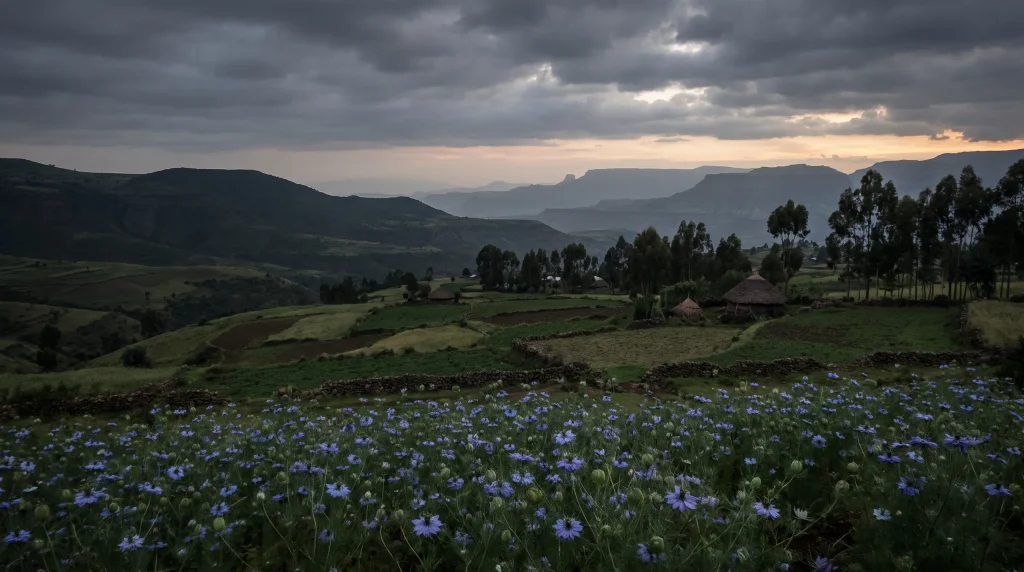
From Ethiopia's highlands. Since the 1960s.
Our family grows black seed near Gondar and presses it on site, cold and gently. The result: up to 5% thymoquinone, measured in the oil.
One family. One highland.
Vitaphyt is a family with its own fields. Here is how our oil is made, step by step.
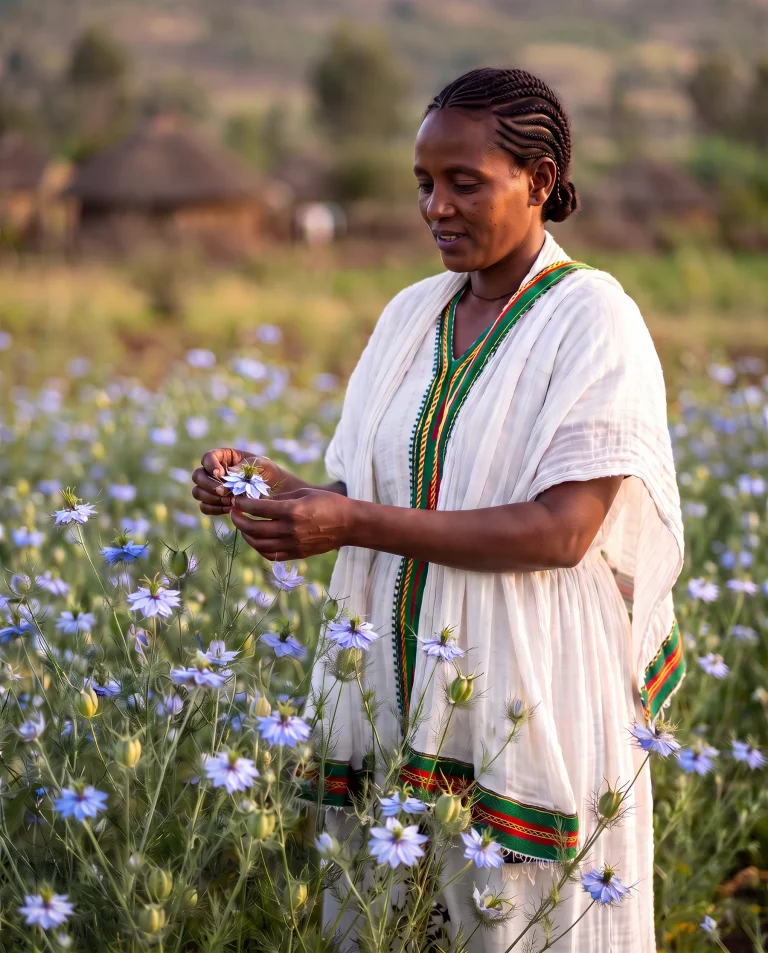
Our fields. Since the 1960s, our family has farmed fields near Gondar, in the highlands of the Amhara region. We know every slope and when the seed is ripe.
Our work. We sow, tend and harvest the crop ourselves, by hand, once the seed capsules are ripe. Then we clean the seed on site of chaff, dust and small stones.
Our pressing. It is the heart of Vitaphyt. We press in Ethiopia, cold and purely mechanically, at no more than 35 °C. No pre-heating, no filtering. It costs yield and spares the oil. The result: up to 5% thymoquinone, measured in the oil.
Our standard. The seed stays in our hands until it is pressed. Only for bottling does the oil travel to Germany. So you know where your oil comes from and who made it.
Our promise
“Behind every bottle is our family. We do not simply sell oil. We bring the harvest from our fields near Gondar to you. Taste the difference our own cultivation and pressing at no more than 35 °C make.”
— The family behind Vitaphyt
Ethiopia. Where our black seed is at home.
A country with its own script, its own calendar and a cuisine full of spices.
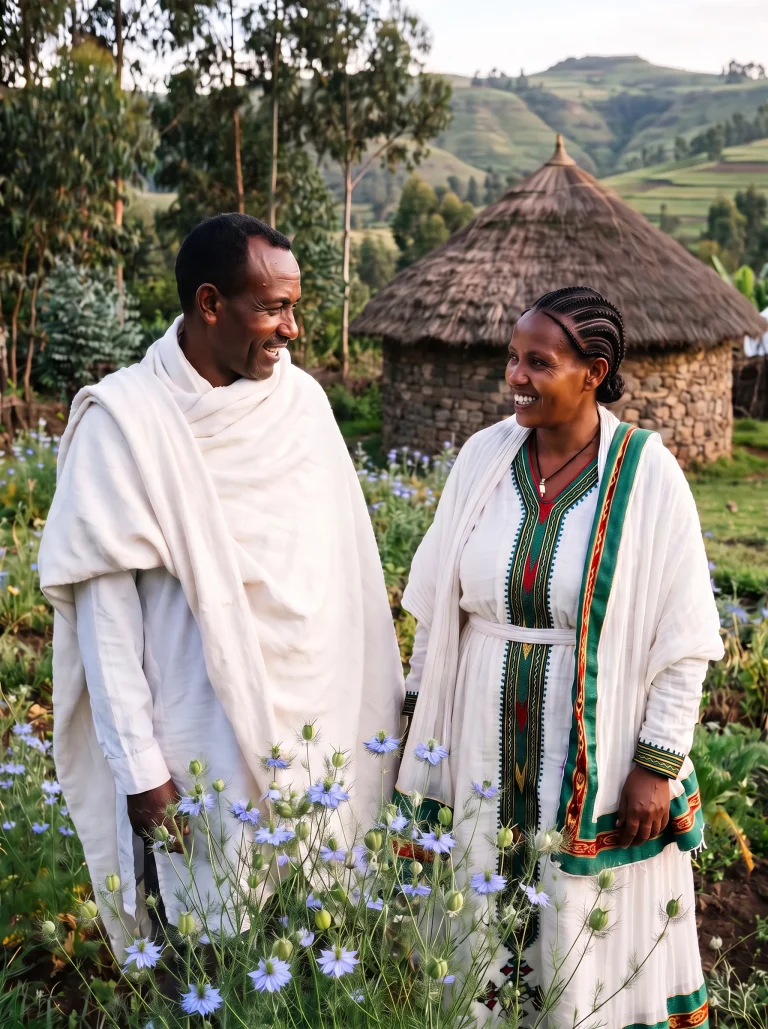
A land of origin. Ethiopia is considered one of the regions of origin of black seed. In Amharic it is called tikur azmud, black cumin. It has been grown and eaten here since time immemorial.
The highlands. Our fields lie at 1,800 to 3,000 m. The days are sunny, the nights cool, the soils dark and rich in minerals. Comparative studies measure high thymoquinone levels in Ethiopian origins.
A country with its own history. Ethiopia has its own script and its own calendar. Coffee and teff originate here. Farming families have selected their own seed for generations.
An everyday spice. Black seed seasons bread, butter and spice blends such as berbere. In many kitchens it is as essential as pepper.
Value stays local. We press where the seed grows, so the work stays in Ethiopia. Only the finished oil travels to Germany.
From field to bottle
Cultivation, harvest, cleaning and cold pressing take place in Ethiopia. The oil is bottled in Germany.
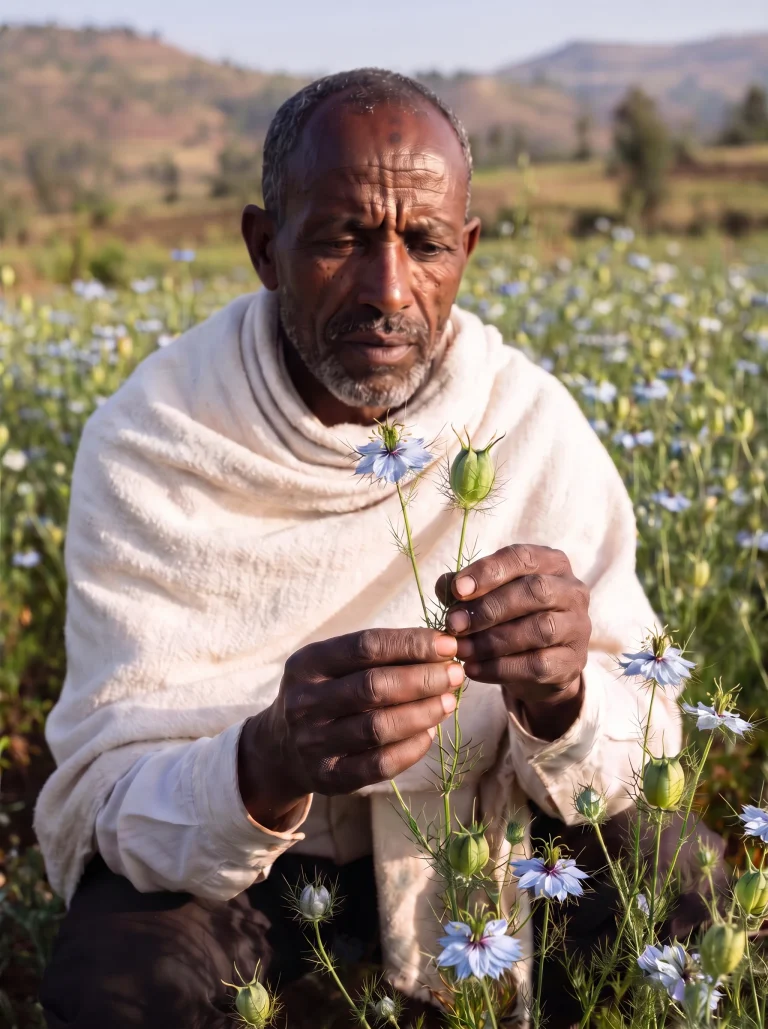
Cultivation and harvest
Traditional crop rotation, without artificial over-fertilisation. Harvested by hand when the seed capsules are ripe.
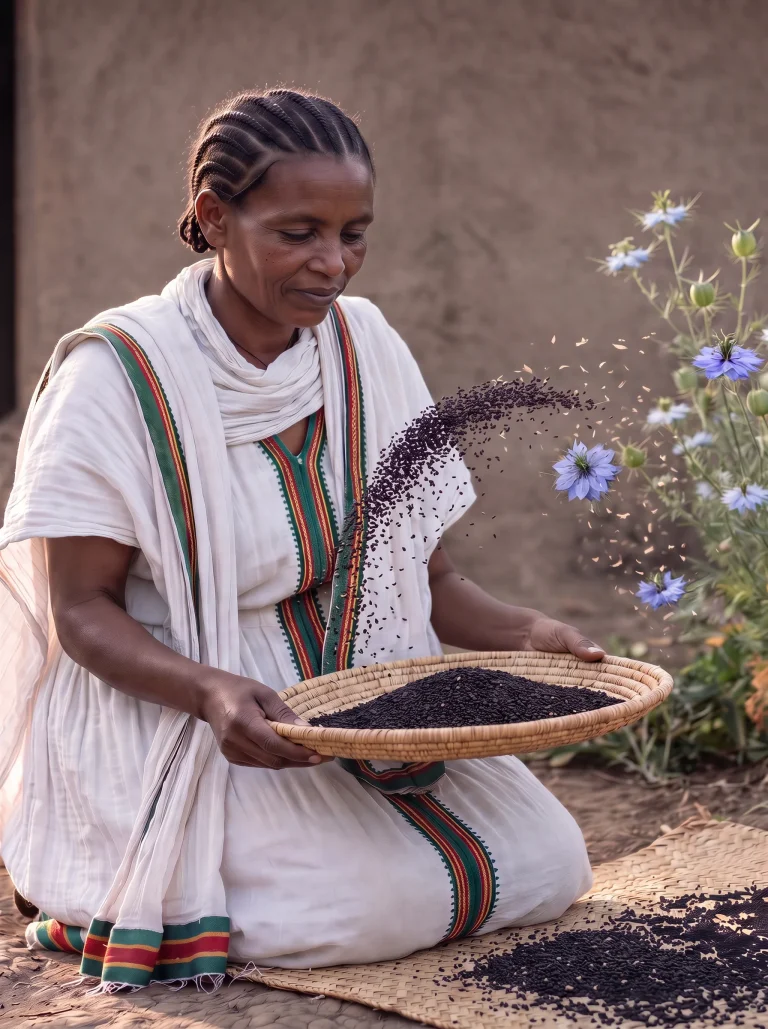
Cleaning
The seed is cleaned in Ethiopia before it goes into the press. Chaff, dust and small stones are removed.
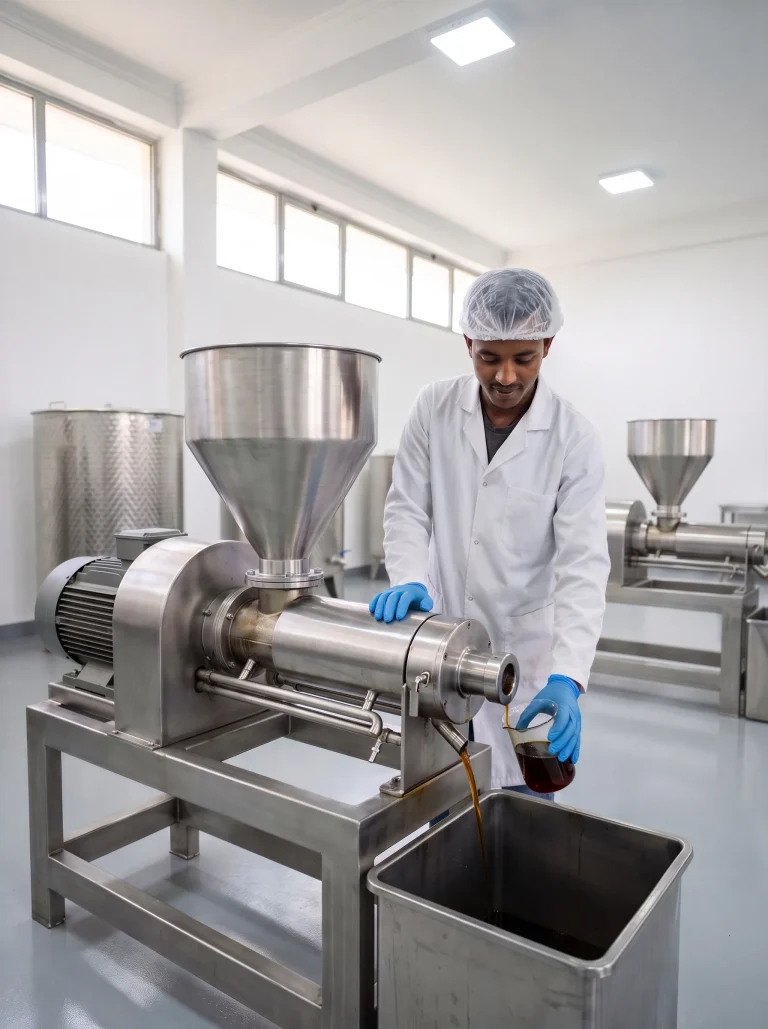
Cold pressing
At max. 35 °C, no pre-heating, no filtering. The sediment stays in the oil, and so does the bold aroma.
Our pressing method
Cold, purely mechanical, no shortcuts. Six decisions you can taste in the oil.
Cold-pressed
Thymoquinone is sensitive to heat. That is why the pressing temperature stays at no more than 35 °C.
Seed as harvested
Pre-heated seed yields more oil. We do without it and accept a lower yield.
By pressure alone
The oil is obtained by pressure alone. No solvents, no extraction.
Naturally cloudy
Cloudy and suspended particles stay in the oil. That is why it is slightly cloudy and tastes bold.
Pressed at origin
The seed is pressed where it grows. Only the finished oil comes to Germany.
Thymoquinone in the oil
The result was measured by Eurofins, an ISO 17025 accredited laboratory.
Up to 5% thymoquinone. Measured, not promised.
Pressed in Ethiopia, bottled in Germany, tested by Eurofins.
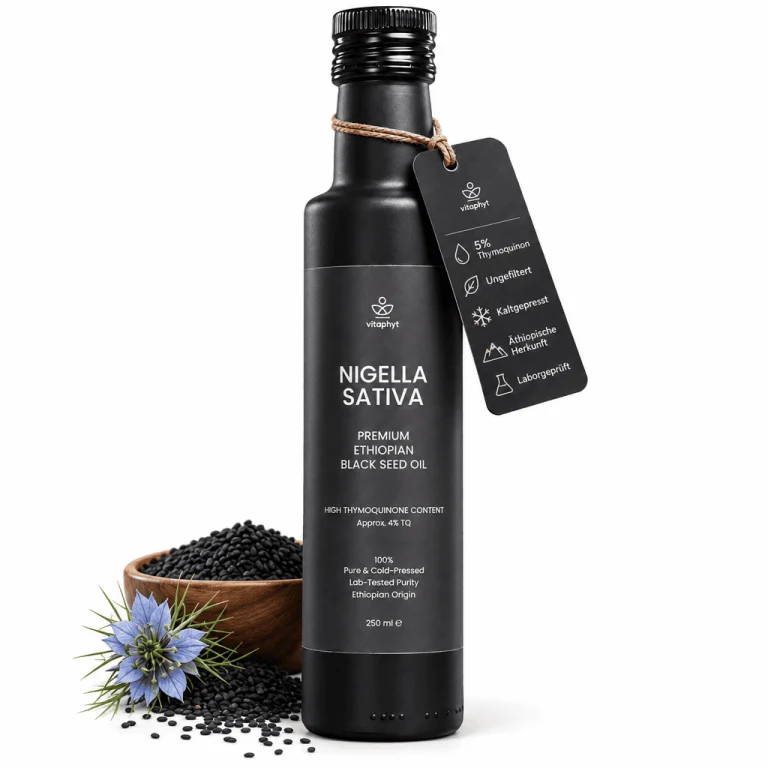
The result. Eurofins, an ISO 17025 accredited laboratory, measured up to 5% thymoquinone in our oil. Pesticides and heavy metals were not detectable.
Why Ethiopia. In a comparative study of black seed from four origins, the Ethiopian seed had the highest thymoquinone content (Maulidiani et al., 2015). We press cold to keep as much of it as possible in the oil.
Bottled in Germany. Pressed in Ethiopia, bottled by us in Germany. The bottles are light-proof and protect the oil from UV light, from bottling to your kitchen.
A tip for any comparison. With thymoquinone figures, check the unit and the reference. 5% equals 50,000 mg/kg. And it makes a difference whether it was measured in the oil or in the seed.
You can read the full report yourself.
Eurofins laboratory report (PDF)Revival · Viability · Nature
Our promise in three words. And what it means for your oil.
Old Gondar varieties
In Ethiopia, Nigella sativa is called “ye tikur azmud”. The traditional varieties grow under strong highland sun.
Up to 5% thymoquinone
Measured in the oil, not in the seed. Tested by Eurofins.
Unfiltered, gently pressed
One variety, one ingredient, nothing filtered out.
Five questions for any black seed oil
Ask every supplier these questions. Our answers are right below.
Where does the seed come from?
Who grew it?
Where and how hot was it pressed?
Is the oil filtered?
Where was thymoquinone measured?
Taste the highlands.
Up to 5% thymoquinone, measured in the oil. 30-day satisfaction guarantee. Free delivery in Germany from 2 bottles.